Europe's Most Stunning Haunted Hotels
Europe has a funny way of making history feel very close. A lot of its hotels sit on foundations that are nearly a thousand years old, which means they come with a long list of former owners, scandals, sieges, and, if you believe the stories, a few guests who never checked out.
Whether you're a true believer or just here for the architecture, staying in a “haunted” castle or palace is one of the most memorable ways to see Europe. These hotels are gorgeous, soaked in history, and happen to have a ghost or two on the guest list. Here are just some of the ones I'd put on your radar this spooky season.
A quick disclaimer: every hotel below is "said to be" haunted. I can't promise you'll see anything. But I can promise the stories are good and the buildings are even better.
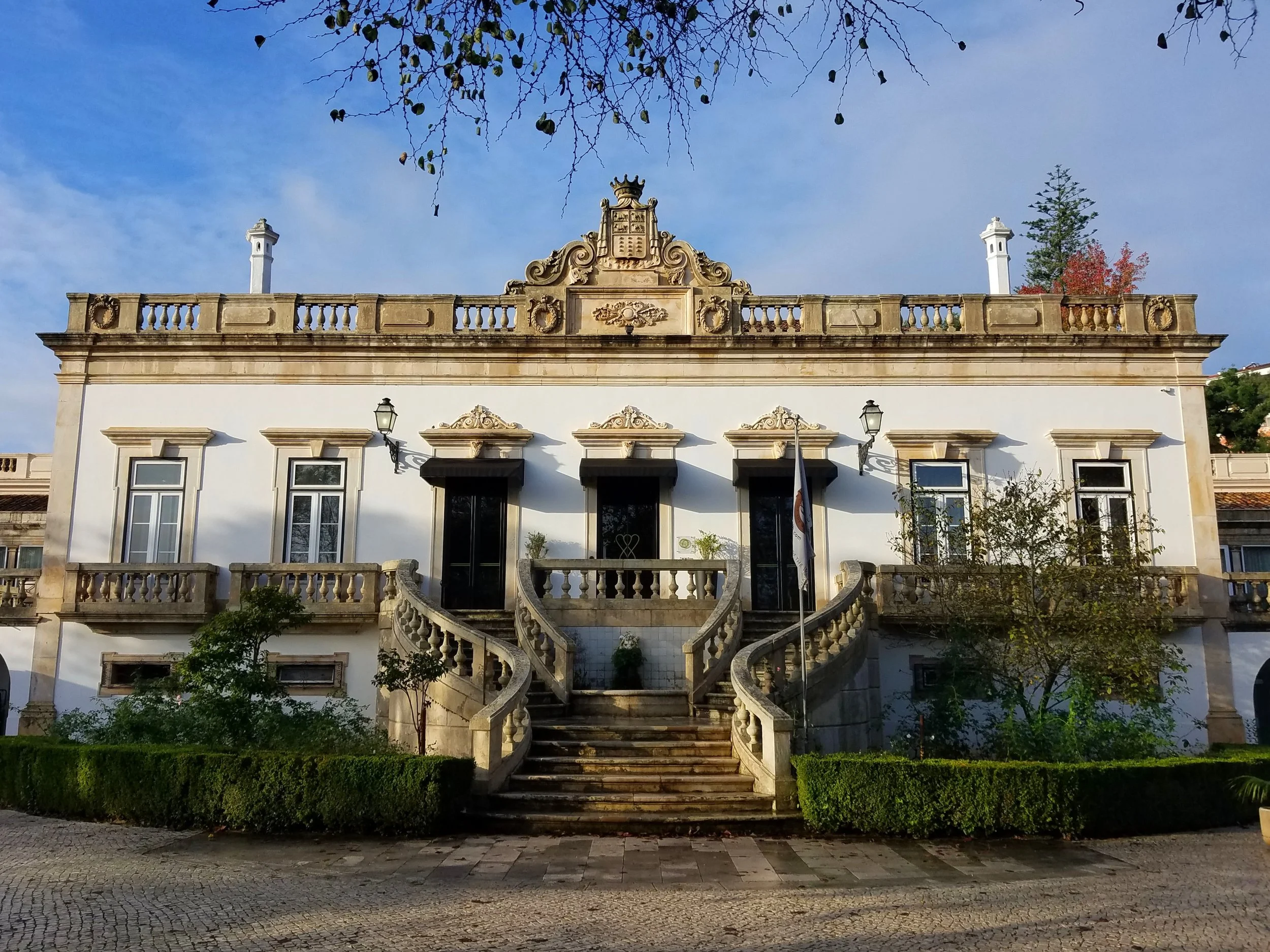
Quinta das Lágrimas, Portugal
If you want a ghost story with real history behind it, this is the one. Quinta das Lágrimas means "Estate of Tears," and the name comes from one of Portugal's most famous love stories, and if I’m being honest, one of my favorite bit of royal Portugal lore.
Inês de Castro was a Galician noblewoman who came to Portugal as lady-in-waiting to Constança, the wife of Prince Pedro. She and Pedro fell in love, and after Constança died, he brought Inês back from exile and settled with her in Coimbra, where they had four children. King Afonso IV worried about the Castro family's growing influence, and in 1355, while Pedro was away, three men ambushed Inês in the gardens where the couple used to meet. Legend says her tears became the spring known as the Fonte das Lágrimas, and her blood stained the stone of the Fonte dos Amores (Lovers' Fountain) red. Visitors to the estate still seek out the Lovers' Fountain.
Pedro's revenge was something else. He became king in 1357, claimed he and Inês had secretly married, and had two of her killers executed, with their hearts famously torn out. Then comes the part of the story that historians doubt but everyone loves: Pedro is said to have exhumed Inês, crowned her queen, and seated her on the throne beside him while the entire court lined up to kiss her hand. Her body was carried to Alcobaça, where he built two matching tombs, placed so the lovers would see each other first on Judgment Day. Inês is said to still haunt the estate, heard crying in the gardens as she searches for her lost love.
The palace you stay in today was built after the Osório Cabral de Castro family acquired the estate in 1730, and it's now a luxury hotel surrounded by about 12 hectares of gardens.
Good to know: Coimbra sits roughly halfway between Lisbon and Porto, so it's an easy stop if you're building a Portugal trip. Pair the night here with a wander through the old university town.
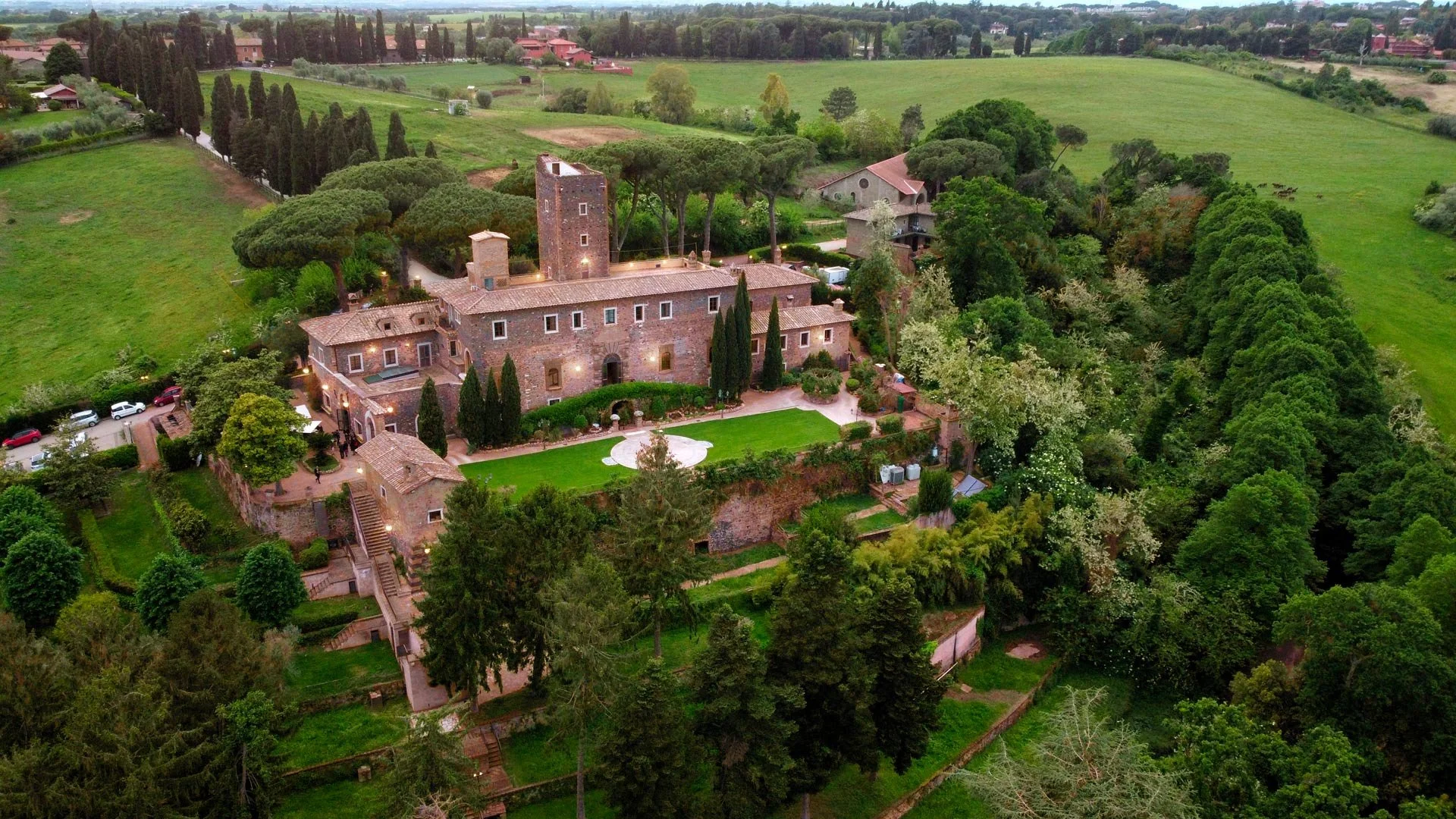
Castello della Castelluccia, Italy
Castello della Castelluccia has been welcoming guests for centuries, with origins that go back around a thousand years. It sits in the Lazio countryside outside Rome, not far from a monument on Via Cassia that's traditionally called Nero's tomb, and that location is the root of its best story. Legend says Nero's restless ghost wanders from his tomb to the castle, looking for a peaceful place to sleep.
Nero never seems to rest easy in any version of the tale. In Rome itself, legend says his spirit troubled the city so much that an 11th-century pope had a haunted walnut tree cut down and built a chapel in its place.
The castle has other residents, too. One is an alchemist said to have been killed by lightning in the tower in the 1600s. Another is a pack of ghost horses. As the story goes, a nobleman sold his horses to pay off a gambling debt, the animals were shipped to a foreign land and soon died, and their spirits found their way back to Italy. Guests say they gallop across the grounds at night.
Good to know: It's a small property with around 23 rooms, and it's close enough to Rome to tack onto the start or end of an Italy trip if you want a quieter first or last night.
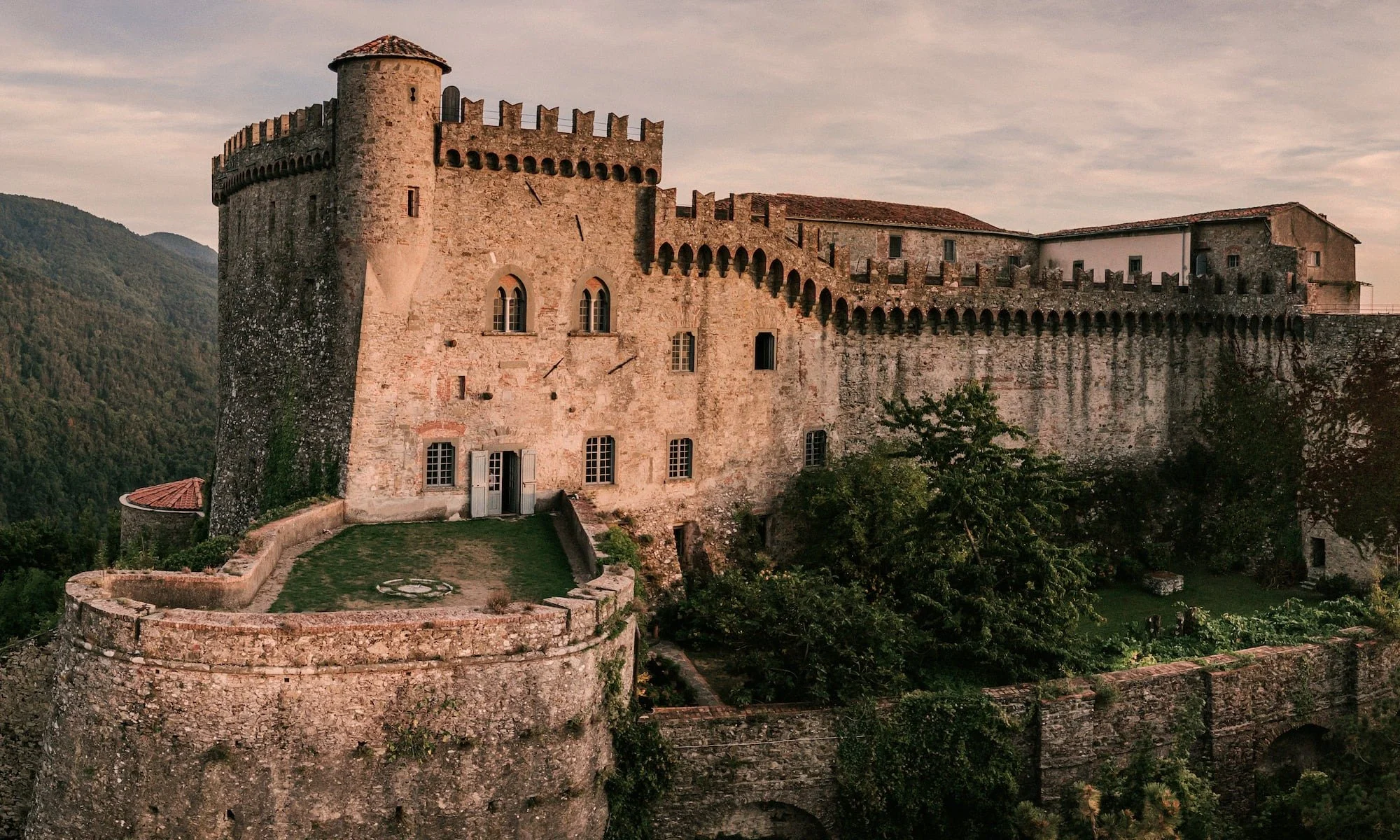
Castello Malaspina di Fosdinovo, Italy
This castle in the Lunigiana hills of northern Tuscany is one of the best-preserved medieval fortresses in the region, with a keep that dates back to the 11th century. The Malaspina family, whose name means "bad thorn," took it over in the 1300s and ruled from here until Napoleon ended their fief in 1796. Dante stayed here during his exile, and you can still see the room traditionally called Dante's Chamber, tucked into the east tower.
The castle's most famous legend belongs to Bianca Maria Aloisia, the daughter of a Malaspina marquis, who fell in love with a stable boy against her parents' wishes. As the story goes, she was walled up alive inside the castle as punishment, and some versions say her dog and a wild boar went in with her. Her ghost is said to roam the rooms on full moon nights, still accompanied by her animals, and the spots on the throne room ceiling are said to tell her story.
She isn't the family's only dark legend. The marchesa Cristina Pallavicino is rumored to have gotten rid of unwanted lovers through a trapdoor at the foot of her bed.
Good to know: There's a small B&B inside the castle, so you can sleep within these walls. If you're visiting during the day, the guided tour takes about 50 minutes and covers the frescoed halls, Dante's room, a collection of weapons and torture instruments, and Bianca's room. The castle is about 30 minutes from La Spezia, the gateway to Cinque Terre, so it fits easily into a Tuscany or Cinque Terre trip.
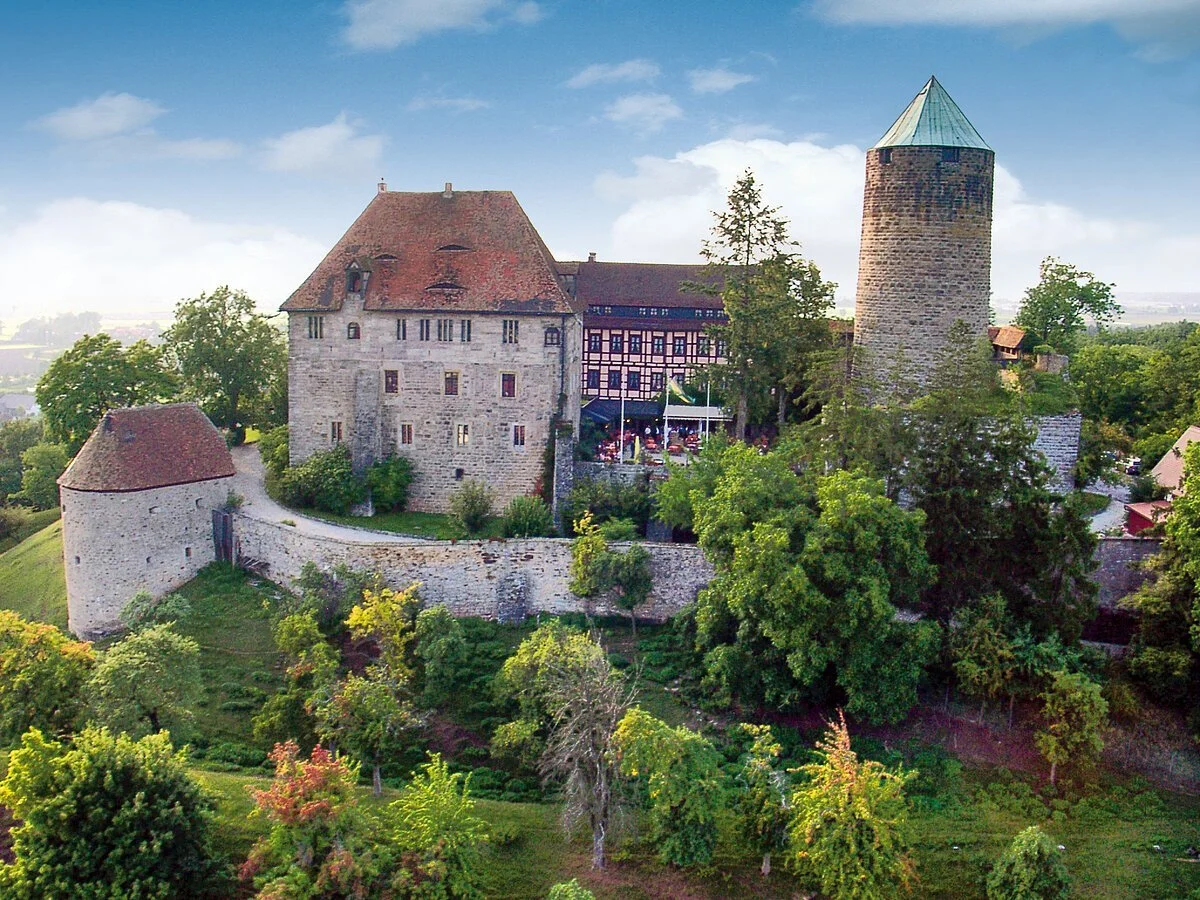
Burg Colmberg, Germany
Burg Colmberg is a proper medieval castle on a hilltop in Franconia, not far from Rothenburg ob der Tauber on the Romantic Road. Its roots go back to the Staufen era, and for almost 500 years it belonged to the Hohenzollerns, the dynasty that eventually produced Prussian kings and German emperors. It held up well against sieges, too. The imperial commander Tilly tried and failed to take it in 1631 during the Thirty Years' War. The Unbehauen family has run it as a hotel since the 1960s, and inside it's all stone staircases, tiny chapels, antique furniture, and twisting hallways.
The Hohenzollerns are famous for their own ghost, a White Lady said to appear before a family member's death, so it's fitting that Colmberg has a spirit of its own. The ghost of a young woman is said to roam the halls after midnight, sometimes making herself known with strange sounds and mysterious messages on guests' phones. Nobody seems to have a famous backstory for her, which somehow makes her more unsettling.
Good to know: Every room is different, so it's worth looking at the options before you book. It also works well as a base for exploring Rothenburg and the surrounding half-timbered towns.
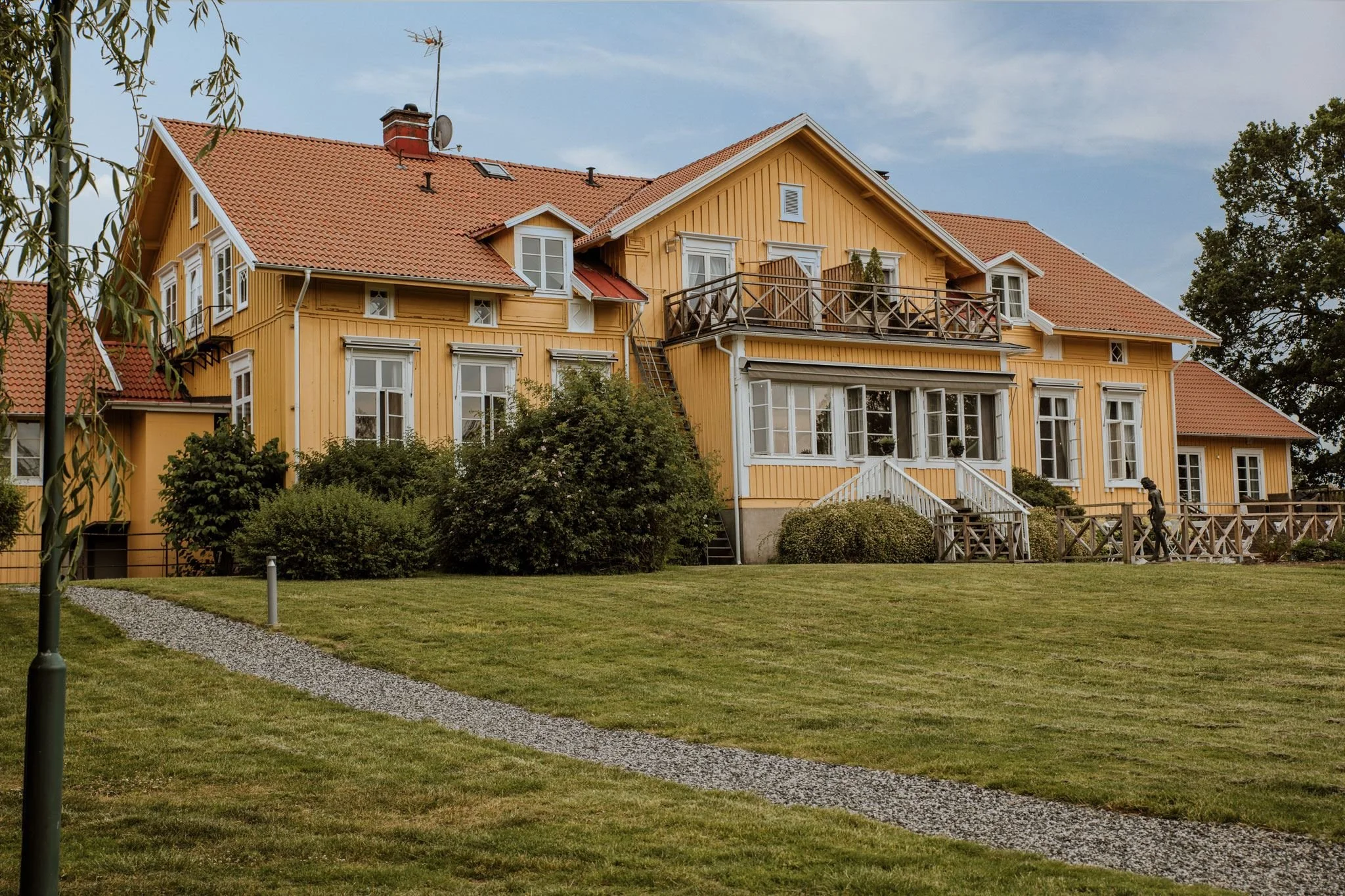
Toftaholm Herrgård, Sweden
Toftaholm is a country manor on the shores of Lake Vidöstern in southern Sweden, with a history that stretches back to 1389. The Stenbock family owned it for its first 260 years, and in the 1500s King Gustav Vasa found his third wife, Katarina Stenbock, here. The main building was finished in 1871.
The ghost story comes from the 1700s. A young man named Mats worked at the manor and was hopelessly in love with the count's daughter. The count arranged for her to marry a nobleman's son, and on the night of the wedding celebration, Mats disappeared. A week later, he was found in one of the guest rooms, having taken his own life. His grave, known as the Mats Stone, sits a few hundred meters from the manor. By all accounts he's a friendly ghost, said to appear behind women and gently rest a hand on their shoulders.
Good to know: Room 324 is the one associated with the spirit, if you want to request it. The manor sits close to the E4 highway, which makes it a convenient first-night stop on a Sweden road trip.
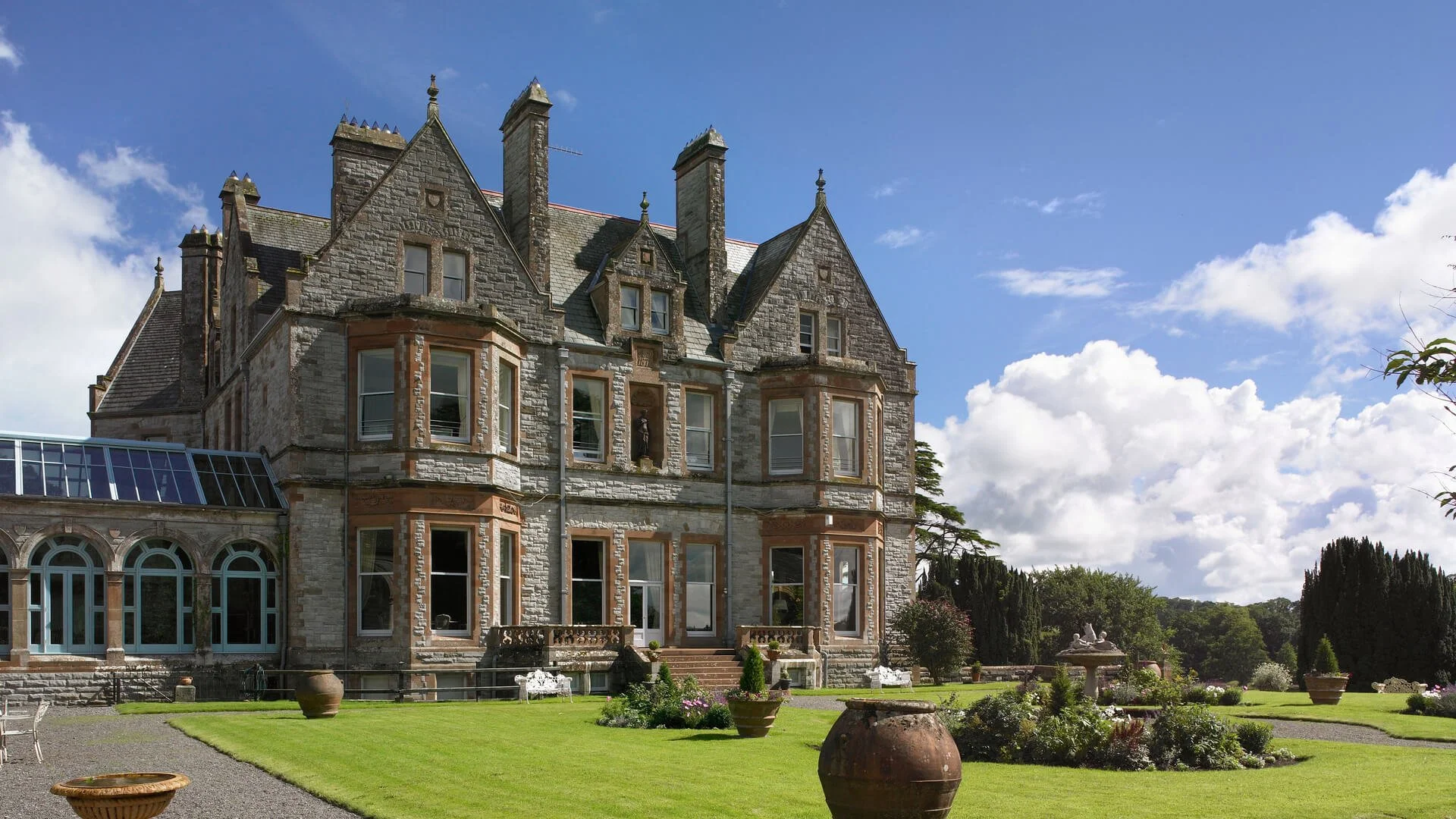
Castle Leslie Estate, Ireland
This is the one I'd send you to if you want haunted and elegant in the same breath. The Leslie family has owned this County Monaghan estate since 1665, when Bishop John Leslie, known as the "Fighting Bishop," bought the land. The Scottish Baronial castle you see today was completed in 1878, and it's still in the family's hands.
The headline ghost belongs to Norman Leslie, who was killed near Lille in October 1914, early in World War I, while charging a German machine gun armed with only his sword. He was in line to inherit the estate, and he was reportedly seen walking the castle grounds around the day he died. Weeks later, a member of the family woke to find him standing at a chest of drawers in the Red Room, reading through his letters as if searching for one in particular. She asked what he was doing there. He smiled, then faded away.
Guests in the Red Room today report papers shuffling in the night and a glowing figure searching through documents. Norman is also said to have a habit of "hushing" noisy visitors with a firm "Shh!"
He has plenty of company, too:
Lady Constance, the Mauve Bedroom: Her apparition famously appeared to Lady Leonie Leslie on her deathbed, and to Leonie's nurse, who later recognized her face in a painting of Lady Constance, who had died in 1925.
Uncle Moreton: In 1927, Norman's older brother, Shane Leslie, reportedly met the ghost of his uncle Moreton on the estate. He appeared to warn Shane about a controversial article.
The banquet hall and basement: Visitors and staff have reported a monk in the banquet hall, along with the sound of a crying child, and a grey man with a frightening expression who quickly approaches and vanishes in the basement. Spectral laughter is said to drift through the halls.
Patch the dog: The estate is also said to be visited by the ghost of a Jack Russell terrier named Patch.
Good to know: Ask for the Red Room when you book. Availability isn't guaranteed, but it never hurts to request it, and the room has a gorgeous view over Glaslough lake. If Lady Constance sounds more your speed, ask about the Mauve Bedroom too.
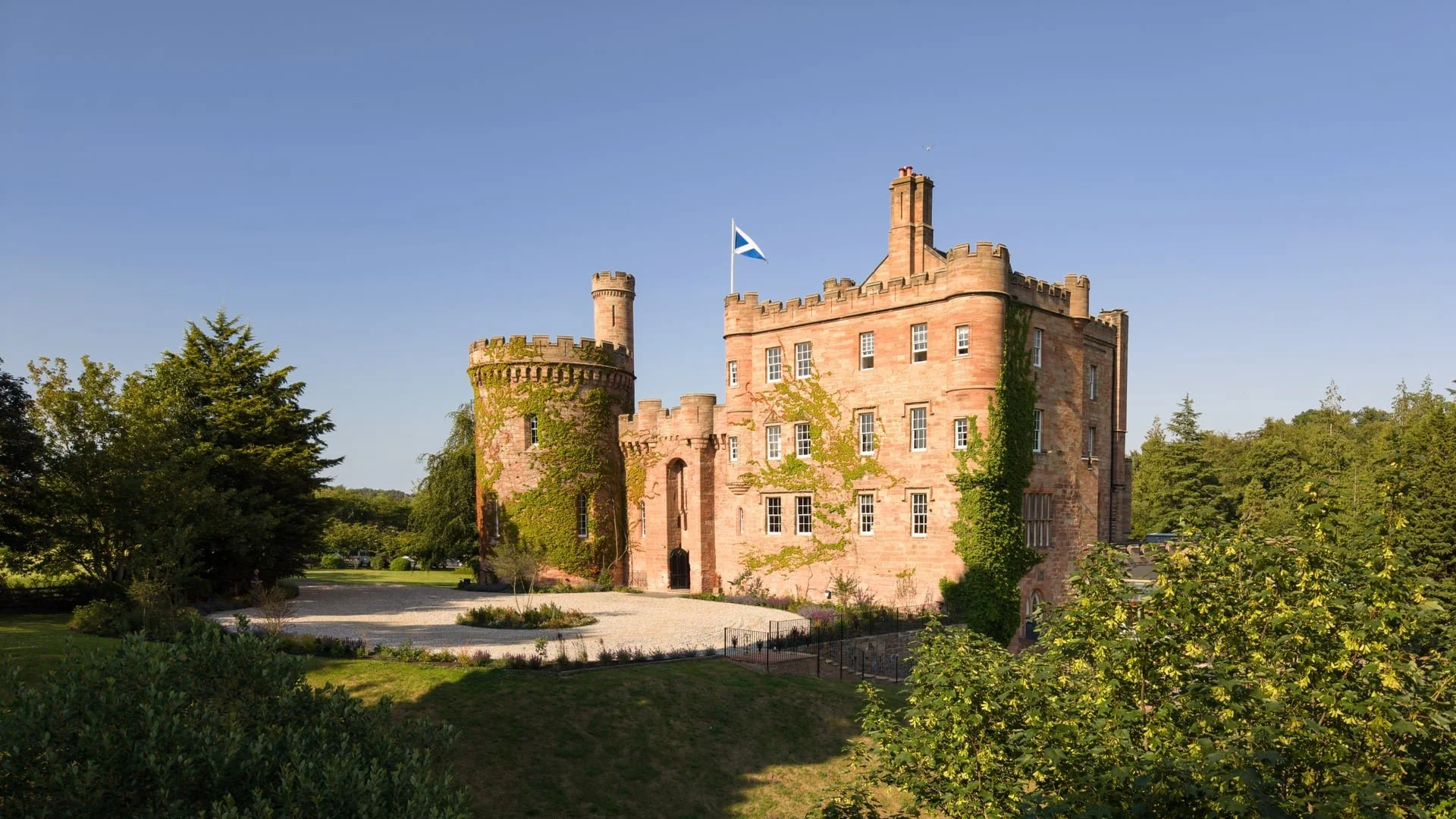
Dalhousie Castle, Scotland
Dalhousie is a 13th-century castle in Midlothian, just outside Edinburgh, and it was the ancestral home of the Ramsay family. It's one of the easiest haunted stays to fit into a Scotland trip, and it's had a long life, including time as a private boarding school before becoming a hotel in 1972.
Its resident ghost is Lady Catherine, known as the Grey Lady for the color of her dress. Accounts differ on the details. In one version, she was the 16-year-old mistress of a Ramsay laird, and his wife locked her in a tower turret and left her to starve. In another, she was banished to the tower after falling for a stable hand. Either way, she's said to still roam the stairs, halls, and turrets, rustling her dress and tapping guests on the shoulder. Pipers who've seen her say the bagpipes refuse to play a sweet tune when she appears.
She isn't the only one. Sir Alexander Ramsay, a famous lord of the castle, was starved to death in 1342, and his ghost is said to wander the grounds too.
Good to know: The castle has 29 rooms and a full spa, so this is a great pick if you want your haunted stay to feel like a proper getaway. It also runs regular ghost tours, and it's an easy add-on to an Edinburgh stay.
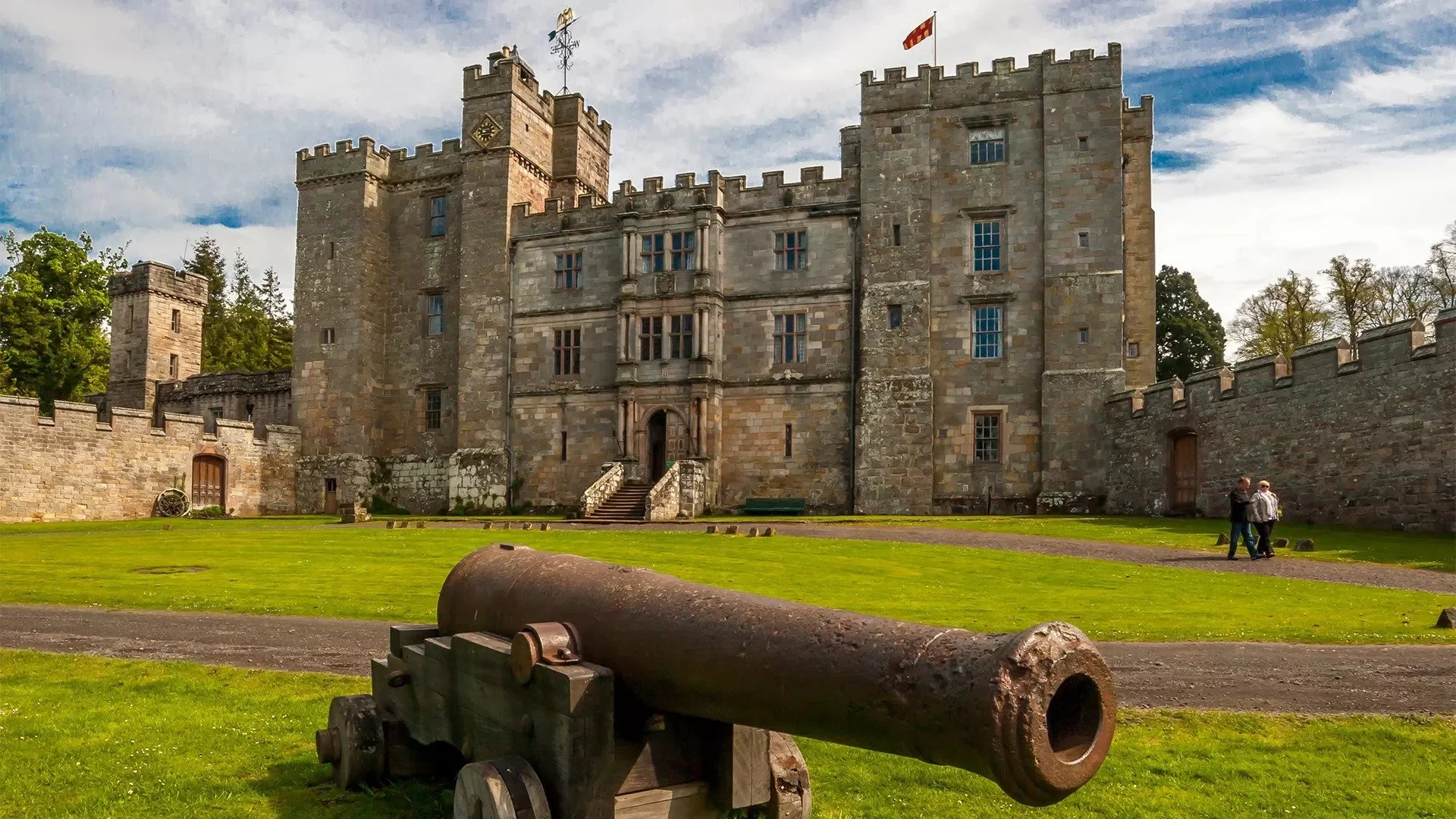
Chillingham Castle, England
Chillingham calls itself the most haunted castle in the UK, and it leans into it. This medieval fortress in Northumberland sits near the Scottish border, and its location made it a place of invasion and prisoners, with a torture chamber that still has its own stretching rack, bed of nails, and thumb screws. Cozy.
The most famous ghost is the Blue Boy, said to appear in the Pink Room. For years, guests reported blue flashes of light, a glowing blue halo, and a child's cries coming from one of the walls. Then, during renovations in the early 1900s, workers found the skeleton of a young boy hidden inside the wall, alongside scraps of blue fabric.
The other big name is Lady Mary Berkeley, whose husband, Lord Grey, left her for her own sister. She stayed on at the castle with their baby daughter and died in 1719, and she's said to wander the halls as the Grey Lady, searching for him. There's also a woman in white said to haunt the pantry, plus voices in the chapel and rattling chains near the torture chamber.
Good to know: You stay in self-catering apartments rather than a traditional hotel, and guests get access to the courtyard after the castle closes to visitors. Book one of the ghost-hunting tours if you want the full experience. This one is best for people who really want to lean in, so maybe skip it if you're a light sleeper with a big imagination.
A Few Tips Before You Book
Go in shoulder season. Fall and early winter are peak ghost season, but also a lovely time to visit these regions without the summer crowds.
Rent a car for the castles. Most of these properties are in the countryside, so having your own wheels makes it much easier.
Mention the ghost story when you book. Many of these hotels know exactly which rooms have the reputation and will happily tell you the story.
Pair it with a real itinerary. These work best as one or two nights built into a bigger trip, like a night at Quinta das Lágrimas between Lisbon and Porto, a stay at Castelluccia on either side of Rome, or a night at Fosdinovo on a Cinque Terre trip.
Ready to Spend the Night?
Even if the ghosts never show up, a night in a castle with this much history is worth it. If you want help building a trip around one of these hotels, I'd love to put it together for you.